Governance

Corporate Governance 

Since 2010, Petro Matad has followed the QCA Corporate Governance Guidelines for AIM Companies (QCA Code), and the Board, to the extent considered applicable, has ensured that the company is in compliance with that Code. Additionally, we formed a Corporate Governance, Social Action and Environmental (CGSAE) Committee in 2010. The Committee is charged, amongst other things, with overseeing and reviewing compliance and corporate governance issues.


Following the changes to the Alternative Investment Market (AIM) rules, which now require AIM-listed businesses to adopt a recognised corporate governance code, the company is pleased to report that the Board has chosen to continue to follow the QCA Code and has evaluated its corporate governance regime in accordance with the new 2023 edition of the QCA Code.


Key Governance Principles 

  • Delivering Growth
    • Petro Matad prioritises growth by developing an exploration-focused strategy in Mongolia, considering social and environmental impact for sustainable long-term operations, and continually evaluating risk.
  • Maintaining a Dynamic Management Framework
    • Petro Matad maintains an experienced, balanced, and well-functioning Board; the performance of all Directors is evaluated on an ongoing basis.
    • The Board has established an Audit Committee, a Remuneration Committee and a Corporate Governance Social Action and Environmental (CGSAE) Committee, each with formally delegated rules and responsibilities, to promote a corporate culture based on our shared ethical values and behaviours.
  • Building Trust
    • Petro Matad establishes trust with investors by encouraging two-way communication with both institutional and private investors and responding to queries received.


Our Board of Directors  

The Board is currently comprised of two Non-Executive Directors (who are shareholder representatives), one Independent Non-Executive Director and one Executive Director.  Due consideration is given to the composition of the Board to ensure:

  • The principle of having at least one Independent Director on the Board to oversee the interests of the company and all shareholders
  • Ensuring that the Board has appropriate skills, experience and expertise
  • Maintaining appropriate representation for the company’s major shareholder Petrovis Matad Inc. (Petrovis)
  • Ensuring appropriate executive representation on the Board


As the Board is currently comprised of 4 directors it has been agreed that the independent Non-Executive Director rather than the Chairperson will cast the tie breaking vote in case of a tied vote of the Board on any issue. If and when a fifth Director is added, votes on resolutions will revert to being passed by majority vote. The company intends to appoint a second independent Non-Executive Director; discussions are underway on the skills and background that the ideal candidate should possess.


Whilst the Chairperson of the Board may not fully meet the definitions of an Independent Chairperson, with her experience, skill sets, and independence from Petro Matad’s day to day operations, the company is confident of her leadership in fostering an effective corporate governance regime.


The Board is comprised of the following members:

  • Enkhmaa Davaanyam, Non-Executive Chairperson (Petrovis appointee)
  • Shinezaya Batbold, Non-Executive Director (Petrovis appointee)
  • Timothy Bushell, Non-Executive Director (Independent)
  • Michael Buck, Executive Director (Chief Executive Officer)


Board Committees 

The Board has established an Audit Committee, a Remuneration Committee and a Corporate Governance Social Action and Environmental (CGSAE) Committee, each with formally delegated rules and responsibilities. Management executives and other individuals are invited to attend all or part of the Committee meetings as and when appropriate.


Audit Committee 

Chair – Enkhmaa Davaanyam

Members – Timothy Bushell, Shinezaya Batbold


Remuneration Committee 

Chair – Timothy Bushell

Members – Enkhmaa Davaanyam, Shinezaya Batbold


Corporate Governance, Social Action and Environmental Committee 

Chair  – Shinezaya Batbold

Members – Enkhmaa Davaanyam, Timothy Bushell


How we comply with the QCA Code 

Deliver Growth
QCA Code Principle Application (as set out by QCA) What We do and Why
1. Establish a purpose, strategy and business model which promote long-term value for shareholders The board must be able to express a shared view of the company’s purpose, business model and strategy. A company’s purpose is its essential reason for being. The business model and strategy should fall out of this. A board should be able to explain beyond a simple description of products and corporate structures, how the company intends to deliver shareholder value in the medium to long-term.


In explaining the strategy, the board should have specific long-term objectives against which it can determine if the company is succeeding and in so doing delivering on its purpose.


The board should demonstrate that the delivery of long-term growth is underpinned by a clear set of values aimed at protecting the company from unnecessary risk and securing its long-term future.

The Petro Matad Group’s strategy is focused on delivery of energy in Mongolia from both the hydrocarbon and renewables sectors.


In order to achieve energy independence, Mongolia has commissioned the construction of an oil refinery which is expected to be operational in 2028 with a US$1.4billion loan from the Government of India. Furthermore, to keep pace with rising electricity demand, Mongolia must urgently expand its generation capacity and replace outdated, inefficient coal-fired power plants. Mongolia is uniquely positioned to harness renewable energy, offering a reliable and affordable power supply for its growing population—and even neighbouring regions. The Gobi Desert, for example, boasts some of the world’s highest solar and wind energy potential, with more than 260 days of intense sunlight and powerful, consistent winds. Petro Matad’s strategy and purpose are well within these visionary plans of Mongolia.


In Mongolia’s hydrocarbon sector, shareholder value will be realised with the development and production of any commercial discoveries made by the Company. In addition to development of discoveries the Group will continue to pursue exploration projects within high graded exploration areas in Mongolia by accessing state of the art technical resources to maximise the probabilities of identifying the best opportunities for making potential discoveries. Petro Matad will also look at risk diversification measures such as farmouts should a favourable opportunity arise.


In the rapidly growing renewable energy sector in Mongolia as well as the extractive industry where mining companies such as Oyu Tolgoi are seeking to utilize renewable energy sources to combat climate change where huge potential exits, Petro Matad is pursuing to develop energy generation and electricity storage projects ranging in size from tens to hundreds of megawatts with high ROIs creating shareholder value.


The Board is committed to applying best practice technical, commercial and financial solutions to mitigate risks as much as possible, while always maintaining a proper control environment to ensure all laws and regulations are followed. The Board reviews available funds closely and is always a step ahead to ensure that funds are sought to fund planned future work programmes and projects.


The Board has undertaken to review risks annually using a purpose-built risk matrix, which covers all aspects of the business, including technical, financial, commercial, government and community risks. Risks identified are ranked in relation to the probability of occurrence and impact on operations.


For more information please see the Directors’ Statement and Risk Management section on pages 12 and 36 respectively of our 2024 Annual Report for the year ended 31 December 2024.

2. Promote a corporate culture that is based on ethical values and behaviours

The board should embody and promote a corporate culture that is based on sound ethical values and behaviours, and which is supportive of the delivery of the company’s established purpose, strategy and business model.


The desired culture should be reflected in the actions and decisions of the board and executive management team. Corporate values should guide the objectives and strategy of the company.


The culture should be visible throughout the company’s operations, including recruitment, nominations, training, and engagement. The performance and reward system throughout the company should reflect and reinforce the maintenance of this culture.


The corporate culture should be recognisable throughout the disclosures in the annual report, website, and any other communications by the company, both internal and external.

Business conduct, ethics, environmental protection and corporate social responsibility are key factors for the Company and the Board.


Our Board and all Directors have come from a variety of other international companies and have decades of collective experience in upholding the highest possible ethical standards.


In relation to the Extractive Industries Transparency Initiative (EITI), the Company’s Mongolian subsidiaries are cooperating with the Mongolian government and participates in the transparency report prepared by the Mongolian government.


Business integrity and ethics are upheld within the operations of the Company at all levels to demonstrate a zero-tolerance approach on bribery and corruption. In this respect the Company has adopted a stringent Anti-Bribery and Corruption Policy, including training of its staff.


Petro Matad operates in remote frontier locations in Mongolia and as such are entrusted to protect and minimize impact to the environment. Our environmental values cultivate an environmental awareness throughout Petro Matad as well as within the contractors and third parties whom we operate with. For example, employees, contractors and local hires are trained on Mongolian occupational, health and safety standards and regulations for all required operations and activities. The awareness and training programme includes topics such as Mongolian occupational safety and hygiene laws, investigating industrial accidents, avoidance of acute poisoning, and prevention of occupational diseases, amongst others.


Corporate Social Responsibility (CSR) is an integral part of Petro Matad’s activities. The Company is committed to evaluating and minimizing the social impact of its operations, thereby ensuring its long-term sustainability.

3. Seek to understand and meet shareholder needs and expectations

Directors must develop a good understanding of the needs and expectations of all elements of the company’s shareholder base.


Where not already acquired, companies with a controlling shareholder (for example, an investor controlling 30% or more of the votes able to be cast at a general meeting of the company) should consider putting in place arrangements to protect minority shareholders which may include a relationship agreement or other measures.


The board should ensure proactive engagement with shareholders on governance matters. This should be led by the chair, where appropriate, the Senior Independent Director. Other directors, such as the chairs of the board’s sub-committees, should also make themselves available for engagement with shareholders.


The board must manage shareholders’ expectations and should seek to understand the motivations behind shareholder voting decisions.

The Petro Matad Group encourages two-way communication with both its institutional and private investors and responds quickly to all queries received within the limits of the regulations and market rules. The CEO talks regularly with the Group’s major shareholders and investors and ensures that their views are communicated fully to the Board.


The Board recognizes the AGM as an important opportunity to meet private shareholders. The Directors are available to listen to the views of shareholders informally immediately following the AGM. The Company’s Articles of Association were amended at the September 2018 AGM to enable the Company to potentially hold AGMs in the United Kingdom, in recognition of Petro Matad Limited being listed on AIM, where a substantial number of the Company’s private investors are based. The Company has taken measures at the recent AGMs to enable shareholders to dial-in and observe the proceedings of the meeting and submit questions to be responded which has enabled greater engagement with shareholders. To the best of the Company’s ability, all received questions prior to the AGM are collated and the presentation are tailored accordingly, as to what shareholders want to hear and ensure that as many questions are answered as possible during the session.


In order to provide more informational updates on operations, the Company has established a social media presence.


Where voting decisions are not in line with the Company’s expectations the Board will engage with those shareholders to understand and address any issues.


The Company’s Executive Management is the main point of contact for any enquiries, and the Company has established an email address for this purpose: admin@petromatadgroup.com.

4. Take into account wider stakeholder interests including social and environmental responsibilities, and their implications for long-term success

The company should devote particular attention to its workforce and ensure its practices towards its employees (direct and indirect) are consistent with the company’s values. Arrangements should be in place to enable employees to raise concerns in confidence and processes to ensure that such matters are considered and where appropriate actions are taken.


The board should periodically identify the company’s key stakeholders – for example, suppliers, customers, employees, communities, regulators, or others. The board should understand their needs, interests, and expectations.


Feedback is an essential part of all control measures. Systems need to be in place to solicit, consider and act on feedback from all stakeholders.


The company should devote particular attention to its workforce and ensure its practices towards its employees (direct and indirect) are consistent with the company’s values. Arrangements should be in place to enable employees to raise concerns in confidence and processes to ensure that such matters are considered and where appropriate actions are taken.


The governance and appropriate oversight of company’s approach towards relevant environmental and social issues is a responsibility of the board. Matters that relate to the company’s impact on society, the relating to or stemming from climate change – have the potential to affect the company’s ability to deliver shareholder value over the medium to long-term. These matters must be integrated into the company’s strategy, risk management and business model. The QCA Practical Guide to ESG can assist companies in this regard.

Our vision and values include ongoing engagement with all stakeholders at all levels. Key resources and stakeholders are identified at periodic juncture of the company’s operations and are duly assessed.


Corporate Social Responsibility (CSR) is an integral part of Petro Matad’s activities. The Company is committed to evaluating and minimizing the social impact of its operations, thereby ensuring its long-term sustainability. Petro Matad has developed a Social Performance (SP) Plan based on socio-economic and social impact assessments, which sets out the socioeconomic context, identifies the key stakeholders and associated consultation process, community grievance management mechanism, social investment strategy and commitments including the required resources and budget. As social investment activities, given the severity of the 2023-2024 winter in Mongolia with great livestock loss, Petro Matad made a donation to Matad Soum. including 132 tonnes of fuel, wrapped hay, livestock cover blankets, winter working gloves and food supplies to help the Matad herders protect their livelihoods. In conjunction with the 100th year anniversary of Matad Soum’s establishment celebrations, Petro Matad would funded the construction of a basketball court and children’s playground which was executed by a local company.The core objective of Petro Matad’s SP stakeholder engagement strategy is to build relationships, strengthen trust, gain broad-based support and broaden understanding of the communities in which Petro Matad is operating, which provides a mechanism for effective social risk management.


Petro Matad operates in remote frontier locations in Mongolia and as such are entrusted to protect and minimize impact to the environment. Our environmental values cultivate an environmental awareness throughout Petro Matad as well as within the contractors and third parties whom we operate with.


For more information please see the ESG Statement of our 2024 Annual Report for the year ended 31 December 2024 as well as the ESG page on our website.


The Company liaises closely with the Mongolian regulators in bringing forward issues in the conduct of business and operations within the Mongolian oil industry and renewables sector.


Petro Matad believes a collaborative, dynamic and effective workforce is key to achieving its objectives, and in the execution of operations. The Company is highly committed to mentoring, training and developing the local workforce where possible and their wellbeing. Petro Matad maintains an open and transparent culture and encourages any feedback to improve any deficiencies.


The Petro Matad Group conducts regular reviews on the effectiveness of stakeholder engagement and is committed to improve in areas where deficiencies are recognised.


The Petro Matad Group ensures that feedback from stakeholders are collated from the various channels and liaison points and reviewed by the Executive Management in the process of evaluating execution of operations. Updates are provided to the Board on timely periodic basis which are considered during all decision-making. Necessary measures to ratify any discrepancies are immediately guided and actioned.


The Company encourages feedback from all stakeholders and has established an email address for receiving feedback: admin@petromatadgroup.com. The Company has engaged a public relations firm which will respond to general enquiries on behalf of the Company, recognising that price sensitive information will not be divulged.

5. Embed effective risk management, internal controls and assurance activities, considering both opportunities and threats, throughout the organisation

The board needs to ensure that the company’s risk management framework identifies and addresses all relevant risks in order to execute and deliver on its stated purpose and strategy. Companies need to consider not only the enterprise view but also their extended business, including the company’s entire supply chain, other material third-parties (including suppliers of outsourced services) and any reliance on strategic partners.


Setting strategy includes determining the extent of exposure to the identified principal risks that the company is able to bear and willing to take (risk tolerance and risk appetite). The company should ensure that a balanced view of risk is achieved, and, as well as threats should consider opportunities and the potential for value creation.


The board should ensure that all potential risks are considered, on a proportionate and material basis, including those relating to climate change.


The board should review and consider whether the company’s enterprise-wide internal controls are sufficiently robust to manage the identified risks adequately.


To achieve effective risk management, the board, and in particular the audit committee, must ensure that there are appropriate assurance activities in operation. This may be based on access to internal resources, or particularly in specialist or technical areas, the utilisation of external experts.


It is important to ensure that the company auditor is and is seen to be sufficiently independent of management.

Risk Management on page 36 of our 2024 Annual Report for the year ended 31 December 2024 details risks to the business, how these are mitigated and the change in the identified risk over the last reporting period. As a priority, the Company reacts to changing risk profiles as they are identified.


The Board considers risk to the business at every Board meeting. The Company formally reviews and documents the principal risks to the business at least annually.


The Board has undertaken to review risks annually using a purpose-built risk matrix. Risks identified are ranked in relation to the probability of occurrence, impact on operations. Each identified risk is delegated to a senior member of the management team to monitor and define mitigating and intervening actions, should circumstances warrant it. Where required, expert opinion and assessment are obtained and consulted to reduce exposure.


The Company receives the audit report issued by the auditors prior to release of final results to review auditor independence declarations and audit findings. Any recommendations proposed based on audit findings are immediately noted and measures are implemented to rectify the situation. The Petro Matad management has decades of experience in the energy industry and brings specialist knowledge formed over decades in this area. It is well worth noting that only immaterial control findings were noted in financial audits.


Maintain A Dynamic Management Framework
QCA Code Principle Application (as set out by QCA) What We do and Why
6. Establish and maintain the board as a well-functioning, balanced team led by the chair The board members have a collective responsibility and legal obligation to promote the interests of the company and are collectively responsible for defining corporate governance arrangements. The board should not be dominated by one person or a group of people, and each director must be able to commit the time necessary to fulfil their role. Ultimate responsibility for the quality and effectiveness of the board lies with the chair.


Shareholders should be given the opportunity to vote annually on the (re-) election of all individual directors to the board.


In order to uphold the quality of board independence, the board should be comprised of an appropriate balance between executive and non-executive directors. The independent non-executive directors should comprise at least half of the board. The chair, if independent upon appointment and still considered independent, can be included in this calculation. However, as a minimum there should be at least two non-executive directors whom the board considers to be independent.


Key committees, in particular the audit committee and remuneration committee, should comprise at least a majority of independent NEDs and ideally aim for full independence. The company should consider whether it is appropriate to have a senior independent director.


Boards should be sensitive to both real and perceived impediments to independence. Consideration should be given to those factors which may impede independence which include (but are not limited to): length of board tenure; size of shareholding; prior and/or current commercial or contractual relationships with the company, prior and/or current commercial or contractual relationships with executive directors; and significant incentive pay arrangements beyond a director’s fee.


Since independence can be easily compromised, NEDs should rarely participate in performance-related remuneration schemes or have a significant interest in a company share option scheme. Where performance-related remuneration is considered beneficial, it should be proportionate, and shareholders should be consulted before proceeding.


The board should reflect on its own levels of diversity. Of most importance is ensuring the board possesses the necessary knowledge and skillset – while avoiding groupthink. Consideration should be given to factors such as socio-economic backgrounds, nationality, educational attainment, gender, ethnicity and age. Boards should assess how their collective and individual perspectives add to board discussions and ensure there is sufficiently wide-ranging and business relevant input, to deliver the best decision-making process in the context of the company’s business model, geographic footprint and forward-looking strategy. This assessment should feed into ongoing succession planning for the board.

The Board is currently comprised of two Non-Executive Directors (who are shareholder representatives), one Independent Non-Executive Director and one Executive Director.


Due consideration is given to the composition of the Board to ensure:

  • The principle of having at least one Independent Director on the Board to oversee the interests of the Company and all shareholders
  • Ensuring that the Board has appropriate skills, experience and expertise
  • Maintaining appropriate representation for the Company’s major shareholder Petrovis Matad Inc. (Petrovis)
  • Ensuring appropriate executive representation on the Board


Whilst the Chairperson of the Board may not fully meet the definitions of an Independent Chairperson, with her experience, skill sets, and independence from Petro Matad’s day to day operations, the Company is continually confident of her leadership in fostering an effective corporate governance regime and the effectiveness of the Board.


The retirement of the CFO/Executive Director at the end of 2020 has reduced the number of Board members to four. Accordingly, in order to deal with potential split votes by the Board, Directors have agreed that the Independent Non-Executive Director will hold the tie breaking vote. This arrangement will be revisited by the Board if and when the number of Directors increases above its current level.


The Company also intends to appoint a second independent Non-Executive Director; discussions are underway on the skills and background that the ideal candidate should possess.


All Directors stand for re-election on a rotation basis whereby one third of the Directors of the Company are required to retire from office at each AGM of the Company and may submit themselves for re-election at each AGM of the Company.


The ESG Statement of our 2024 Annual Report for the year ended 31 December 2024 for more details.

7. Maintain appropriate governance structures and ensure that individually and collectively the directors have the necessary up-to-date experience, skills and capabilities

The company should maintain governance structures and processes in line with its desired corporate culture and appropriate to its:

  • size and complexity; and
  • capacity, appetite and tolerance for risk


The governance structures, processes and policies should evolve over time in parallel with its size, strategy and business model to reflect its maturity and stage of development.


The board should be supported by committees – typically at least an audit, remuneration and nomination committee – that also have the necessary skills and knowledge to discharge their duties and responsibilities effectively.


The board should ensure that it has the necessary skills and experience to fulfil its governance responsibilities, including among other things with respect to cyber security, emerging technologies, and relevant sustainability matters such as climate change. The board should consider any need to establish further dedicated sub-committees and, where appropriate, seek input from external advisers on such matters.


All directors should continually update their skills and knowledge. As a company and the external environment evolves, the mix of skills and experience required on the board will change. The board should consider its training and development needs in this context, plan ahead and structure such provision accordingly.


The board (and any committees) should be provided with high quality information in a timely manner to facilitate proper assessment of the matters requiring a decision or insight. The board should consider this and the design and implementation of its decision-making processes to ensure they are effective.

The Company is controlled by the Board of Directors. Enkhmaa Davaanyam, the Non-executive Chairperson, is responsible for the running of the Board and Mike Buck, the Chief Executive, has executive responsibility for running the Group’s business and implementing Group strategy.


Each Director brings different skill sets and capabilities to the Board, resulting in a balanced Board with the necessary blend of relevant experiences, skills and personal qualities to deliver the strategy of the Company.


On an ongoing basis the Board reviews the expertise required on its Board to ensure it is fully capable to determine and implement the Company’s strategy.


Board additions or replacements are made with the required skill set for the Company’s current outlook and business development stage in mind, and candidates are considered on merit, against objective criteria and with due regard for the benefits of diversity on the Board, including gender.


The Company will ensure, where necessary, that all Directors receive the necessary updates and training to keep their skillset up to date.


All Directors receive regular and timely information on the Group’s operational and financial performance. Relevant information is circulated to the Directors in advance of meetings. All Directors have direct access to the advice and services of the Company’s Corporate Manager and are able to take independent professional advice in the furtherance of the duties, if necessary, at the Company’s expense. The Board through a combination of meetings and conference calls regularly reviews operations and implementation of its strategy. Board meetings and discussions are attended by all directors a large majority of the time. Non-Executive Directors are closely involved and updated with regular information flows and are expected to spend at least circa 3-4 weeks of their time each year on Petro Matad matters.


The Board has established an Audit Committee, a Remuneration Committee and a Corporate Governance Social Action and Environmental (CGSAE) Committee, each with formally delegated rules and responsibilities. Management executives and other individuals are invited to attend all or part of the Committee meetings as and when appropriate.


The ESG Statement of our 2024 Annual Report details the Company’s governance structures and why they are appropriate and suitable for the Company. As the Company develops, the corporate governance structures may be reviewed and modified as appropriate.

8. Evaluate board performance based on clear and relevant objectives, seeking continuous improvement

The board should regularly review its performance as a unit, as well as that of its committees and the individual directors.


The board performance review should be carried out on an annual basis and include opportunities for improvement with respect to the performance of the chair, and the operation of the board and its committees. The review should identify development or mentoring needs of individual directors and/or the wider senior management team.


The annual review can be carried out internally and should, ideally, be supplemented periodically by an external independent third-party review.


It is healthy for membership of the board to be periodically refreshed. No member of the board should become indispensable.


Success planning for both the executives and non-executives is a vital task for boards. This should extend to contingency planning for the absence of key staff. There should be a robust process for the orderly appointment of new directors to the board and senior management positions. Considerations should be given to establishing a nomination committee to help with the process and ensure a diverse pipeline – both internally and externally – for succession. The skills, experience, capabilities and background required for directors and senior management to support the next stage of the company’s development should be identified and factored into succession planning.

The Board has not formally adopted performance evaluation procedures. However, the Board takes the effectiveness and efficiency of its Directors seriously and will continue to review its own performance and effectiveness in an informal way against the strategy and objectives the Company has established.


However, all Directors are evaluated on an ongoing basis before being proposed for re-election to ensure that their performance is and continues to be effective, that where appropriate they maintain their independence and that they are demonstrating continued commitment to the role.


Performance of all Executive Directors is monitored on a continual and ongoing basis in order to identify development and mentoring needs where applicable and more generally to ensure effectiveness of the incumbent in meeting the Board’s goals.


All Directors stand for re-election on a rotation basis whereby one third of the Directors of the Company are required to retire from office at each AGM of the Company and may submit themselves for re-election at each AGM of the Company.


The Board keeps in mind succession planning at the Board level, executive management and key personnel at all times in consideration of current and future strategy to minimize uncertainty.

9. Establish a remuneration policy which is supportive of long-term value creation and the company’s purpose, strategy and culture.

It is the board’s responsibility to establish an effective remuneration policy which is aligned with the company’s purpose, strategy and culture, as well as its stage of development.


A remuneration policy should motivate management and promote the long-term growth of shareholder value. Remuneration practices across the company, in particular for senior management, should support and reinforce the desired corporate culture and promote the right behaviours and decisions.


Pay structures for senior management should be simple and easy for participants to understand and foster alignment with shareholders through the building and holding of a meaningful shareholding in the company.


The remuneration committee should, as necessary, consult with other board committees in order to set appropriate incentive targets and to appraise performance in respect of those targets.


The annual remuneration report should be put to an advisory shareholder vote. Where not mandated to be put to a binding vote, remuneration policies should at least be put to an advisory vote. Larger companies may wish to follow best practice and put their remuneration policy to a binding shareholder vote. Given the significance and dilutive impact of such plans, new (or significant amendments to existing) share schemes or long-term incentive plans should be put to a shareholder vote.

The Remuneration Committee establishes a framework for setting and maintaining remuneration at appropriate levels in the Group.


The remuneration policy generally aims to ensure personnel at all levels are remunerated in accordance with industry and local market ranges measured against performance of the overall Company achievements. The Company participates in periodic salary surveys to ensure that the remuneration packages are competitive in the international and local labour markets to attract and retain talents.


In order to ensure careful and efficient spending of available financial resources, the Board has taken decisions in the past to implement temporary remunerations reductions as cost saving measures.


The Board will consider shareholder support of its remuneration policy as necessary.

Build Trust
QCA Code Principle Application (as set out by QCA) What We do and Why
10. Communicate how the company is governed and is performing by maintaining a dialogue with shareholders and other key stakeholders.

A healthy dialogue should exist between the board and all of its key stakeholders, including shareholders, to enable all interested parties to come to informed decisions about the company. Board members, in particular the chair, should be proactive in their effort.


In particular, appropriate communication and reporting structures should exist between the board and all constituent parts of its shareholder base and other key stakeholders. This will assist:

  • the communication of shareholders’ views to the board; and
  • the shareholders’ understanding of the unique circumstances and constraints faced by the company.


Boards should ensure that corporate disclosures, in particular through annual reporting, are appropriate to satisfy the reporting needs of investors, including, but not limited to, sustainability matters.


It should be clear where these communication practices are described (annual report or website).

The Company encourages two-way communication with both its institutional and private investors, responds quickly to all queries received and regularly engages with shareholder platforms in the media. The CEO talks regularly with the Group’s major shareholders and ensures that their views are communicated fully to the Board.


The Board recognizes the AGM as an important opportunity to meet private shareholders. The Directors are available to listen to the views of shareholders informally immediately following the AGM. The Company has taken measures at the recent AGMs to enable shareholders to dial-in and observe the proceedings of the meeting and submit questions to be responded which has enabled greater engagement with shareholders.


In order to provide more informational updates on operations, the Company has established a social media presence and the CEO holds interviews several times a way to provide information on current status of matters and forward plans.


The Company also engaged FTI Consulting in 2017 to enhance investor relations.

This information was last updated on 30 June 2025.


Health, Safety, Security and Environment (HSSE)

Petro Matad remains demonstrably committed to best practices in health and safety management for the benefit of its workers, contractors and all stakeholders.


Petro Matad’s assets are located in remote locations in Mongolia. In this operating environment, it is essential to have fit for purpose health and safety protocols in place to operate safely. The safety of our people, our communities and the environment is our priority for all our activities.


Petro Matad cultivates and implements a safety and environmental awareness culture not only within the company but with the contractors involved with our projects and activities.


HSSE Policies 

Petro Matad has established and maintains documented health and safety policies which are central in guiding all our activities. These policies are appropriate to the nature and scale of Petro Matad Group’s health, safety and security hazards.


Our policies include explicit commitments to operate in a way which is proactive in continual improvement in HSSE management performance, particularly in the prevention of injury, maintaining good health of all people who may be affected by our activities. We are also committed to complying with applicable legal requirements and strive to implement relevant industry best practices in all our activities. Our policies provide the framework for setting and reviewing HSSE objectives and are actively communicated to all persons working under the control of the organization with the intent that they use the principles of the policies to guide all decision making.


It is thanks to the rigorous adherence to these standards that Petro Matad has had zero Lost Time Injuries (LTI) since 2017.


Health, Safety, Security and Environmental Policy

Petro Matad’s Health, Safety, Security and Environmental Policy requires that executive management and all employees are committed to the welfare of all, and it further requires that contractors conduct their services in line with the company’s Policies. The company understands that its people are its greatest asset, and success can only be achieved by ensuring their welfare and wellbeing.


The specific objectives of Petro Matad’s HSSE Policy are to:

  • Achieve an accident-free workplace.
  • Make Health & Safety an integral part of every managerial and supervisory position.
  • Ensure Health & Safety are considered in all planning and work activities.
  • Include the company’s employees in the decision-making process through regular communication, consultation, and training.
  • Ensure a minimal environmental footprint in all activities.
  • Provide a continuous programme of education and development to ensure that the company’s employees work in the safest possible manner.
  • Identify, manage, and control all potential hazards in the workplace through hazard identification and risk analysis.
  • Ensure potential accidents and incidents are mitigated by proactive engagement, with prevention always being the objective.
  • Provide effective injury management; and
  • Comply with relevant occupational Health & Safety laws, regulations, guidelines, and project requirements.


The success of the company’s HSSE Management System is dependent on:

  • Proactive planning of all work activities with consideration given to implementing health and safety controls that are suitable to each given situation.
  • Understanding the total work process and associated health and safety risks.
  • Ensuring that employees and contractors are totally committed to achieving objectives.
  • Ensuring that open and honest communication exists between management and all employees.
  • Minimizing impact on the environment, conserving and protecting the environment in all areas of operations.


Health and Safety Record 

Petro Matad concluded 2024 with zero Lost Time Injuries (LTI) and a total of 89,314 manhours recorded. Petro Matad Group’s Total Recordable Incident Rate (TRIR), which is one of the company’s Key Performance Indicators (KPIs) was also maintained at zero. Leading and Lagging Indicators were documented throughout as part of the routine data gathering required by the company’s HSSE-MS and enabled Petro Matad and its contractors to analyze trends and anticipate potential problems so aiding in achieving the successful outcome for the year.

The commitment of the company’s management and staff and the continuous and rigorous application of safety systems, policies, and procedures, combined with ongoing training resulted in zero LTIs since 2017.


HSSE Management System

Petro Matad’s HSSE is molded by the company’s HSSE Management System (HSSE-MS). It enables real time and practical support in all the company’s activities and operations as well as ensuring structural compliance with international standards and Mongolian laws and regulations. To apply best in class practices in operating procedures as well as compliance with Mongolian legislation, the company adheres to guidelines set out in: International Association of Oil and Gas Producers (IOGP), ISO 14001 Environmental Management System Guidelines, ISO 45001 Occupational Health and Safety Management System Guidelines, International Association of Drilling Contractors (IADC), and International Association of Geophysical Contractors (IAGC).


To implement the commitments of our HSSE policies, Petro Matad has established and maintains a standards based HSSE-MS which is structured according to International Association of Oil and Gas Producers (IOGP) 510 Operating Management System Framework supported in the Supplement Report 511 Operational Management System. As revised policies and procedures are released by IOGP, the company’s HSSE-MS is updated to reflect changes accordingly.


The HSSE-MS is designed to provide practical and real time support for our operations by enabling quick and reliable access to industry standards. The HSSE-MS is explicitly aligned with ISO14001 Environmental Management System Guidelines, ISO 45001 Occupational Health and Safety Management System Guidelines, the International Association of Geophysical Contractors (IAGC), the International Association of Drilling Contractors (IADC) and American Petroleum Institute (API) guidance where appropriate.


For Petro Matad’s Environmental commitments see Environment page here.


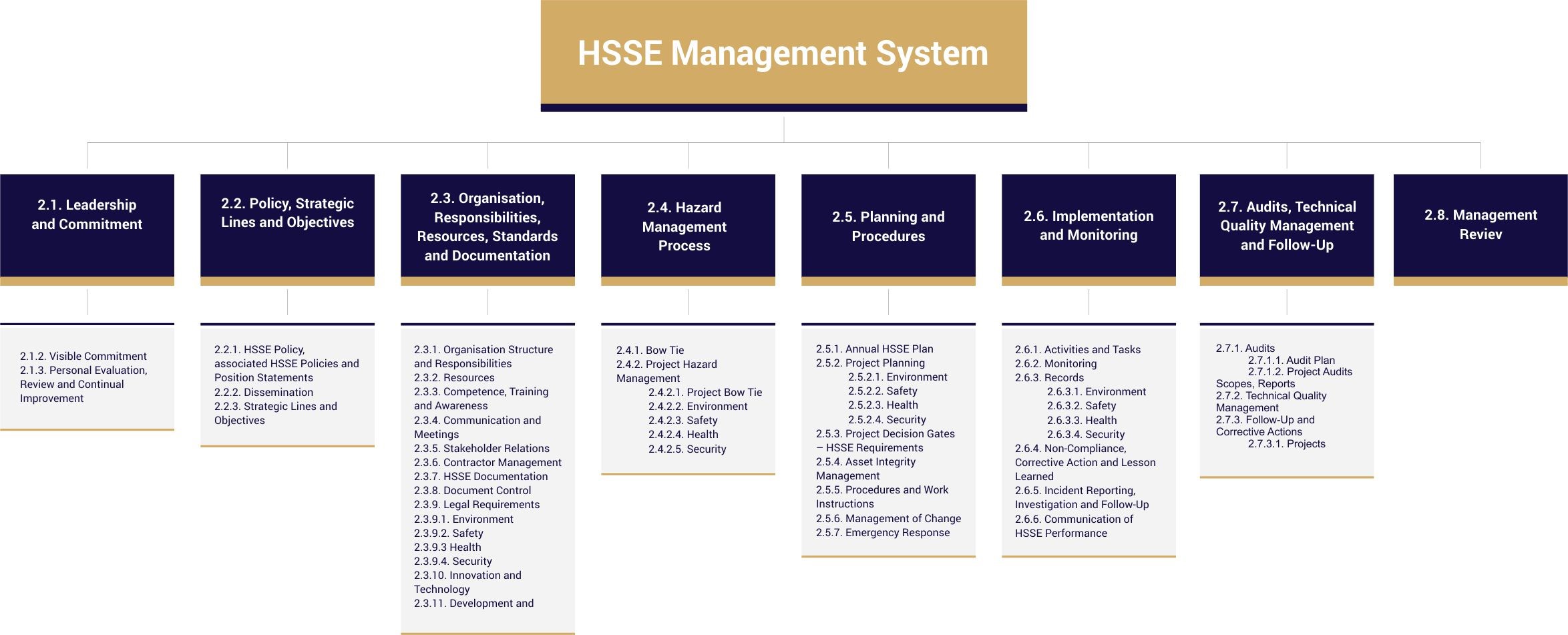
Structure of Petro Matad’s HSSE Management System

Clear definition of standards, competence assurance, efficient and open communication and record keeping lies at the heart of our HSSE-MS. The HSSE-MS emphasize on quality assurance in communications, asset integrity and both generic task and project workplace specific competence in all activities. All risks are structured according to International Association of Oil and Gas Producers 510 Operating Management System Framework supported in the Supplement Report 511 Operational Management System Practice and ISO 45001 Occupational Health and Safety Management System Guidelines to ensure that risk management is both proactive and demonstrably effective to all stakeholders appropriate to their needs.


Operations

Petro Matad is committed to supporting the building of industry capacity for hydrocarbon exploration and exploitation in Mongolia. We are currently working with the government on bolstering the legal mechanisms that are in place for future projects and developments in the country.


We manage our seismic, drilling and other field-based exploration and exploitation operations using IOGP 423 Contracting Model Guidelines and work with all successful contractors to ensure that our HSSE standards are maintained. Seismic programmes operate under the guidelines of IOGP 432 Managing HSE In A Geophysical Contract and drilling programmes to the IADC HSE Land Drilling Case. The final report and HSSE management review of all projects are seen as central to organizational learning and continual improvement.


We operate a proactive HSSE observation programme not only to identify unsafe acts and conditions but also to identify best practice in all our operations. Information from the observation programmes is actively combined with monitoring and learnings from incidents. The process ensures that effective and quick corrective actions are taken and that root cause preventative measures are identified. All incidents are investigated, recorded and classified according to IOGP guidelines and learnings are shared through the management review process.


Operational Activity 

The company considers current and future HSSE needs and requirements at all times.


Due to Covid-19 pandemic restrictions and impact on the oil industry, Petro Matad was unable to conduct restoration to Heron-1 and Gazelle-1 drilling leases after operations ended in 2019. With easing of restrictions, in 2022 technical restoration was completed on both drilling leases utilizing a specialist restoration contractor. Both drilling lease areas were inspected with the province’s Handover Committee signing off on the formal compliance acceptance acts.


Subsequent to the completion of drilling of Velociraptor-1 well in Block V, Petro Matad will restore the area impacted by the drilling operations to its original state as practicably possible and obtain formal compliance acceptance acts.


Production Operations and Safety Management

With Petro Matad transitioning to a producer, it is essential that all aspects of the production operations including personnel conduct, equipment integrity, and environmental safeguards are managed in strict compliance with both Mongolian national legislation and applicable international safety standards. All production and supporting equipment at the production wellsite are maintained under a routine servicing and preventative maintenance schedule, fully in accordance with the original manufacturers’ specifications. This ensures optimal functionality, prolongs equipment lifespan, and mitigates risks related to mechanical failure, emissions, and operator safety. In line with Mongolian regulatory requirements, comprehensive safety and operational signage has been installed across the production site. This includes clearly displayed hazard warnings, safe operating procedures, emergency contact information, and access restrictions, all of which promote situational awareness and guide safe conduct on-site.


Operator activities are carried out in strict accordance with Mongolia’s Occupational Health and Safety (OHS) regulations. Where relevant, operational practices are also aligned with international best practices as outlined by the International Association of Oil & Gas Producers (IOGP), reinforcing our commitment to globally recognized safety benchmarks.


Risk Management 

Petro Matad recognises the significance of a proactive stance on HSSE risk management in its operations to provide measures that protect its employees, its contractors and the environment and communities within which the company operates. Prior to any operations, all risks and hazards are identified, and mitigating measures are implemented to reduce risks where possible to as low as is reasonably practical.


The nature of the company’s business involves exposure to potentially hazardous materials. Any loss of containment of hydrocarbons or other dangerous substances may have adverse effects on both the environment and the health of individuals. Through operational controls, integrity of asset protocols and environmental risk management, the company continues to aim to eliminate all environmental risks that may have an impact on the environment and stakeholders.


Engagement and Training 

Through an extensive engagement programme, employees, contractors and local hires are trained on Mongolian occupational, health and safety standards and regulations for all required operations and activities. The awareness and training programme includes topics such as Mongolian occupational safety and hygiene laws, investigating industrial accidents and prevention of occupational diseases, amongst others.


All personnel assigned to production wellsites have completed job-specific safety and operational trainings, which include induction on site-specific hazards, emergency preparedness, and safe working procedures. Toolbox meetings, safety drills, and regular inspections are conducted to reinforce a strong safety culture and ensure that all risk control measures remain effective and up to date.